Schedule an Appointment
**Requested time is not final until you receive confirmation from our office. Please do not submit any Protected Health Information (PHI).
Protecting your health starts with your skin. At Lazzara Dermatology, we specialize in diagnosing and treating skin cancer with innovative technology and personalized care. From early detection to treatment, our expertise ensures the best possible outcomes for our patients.

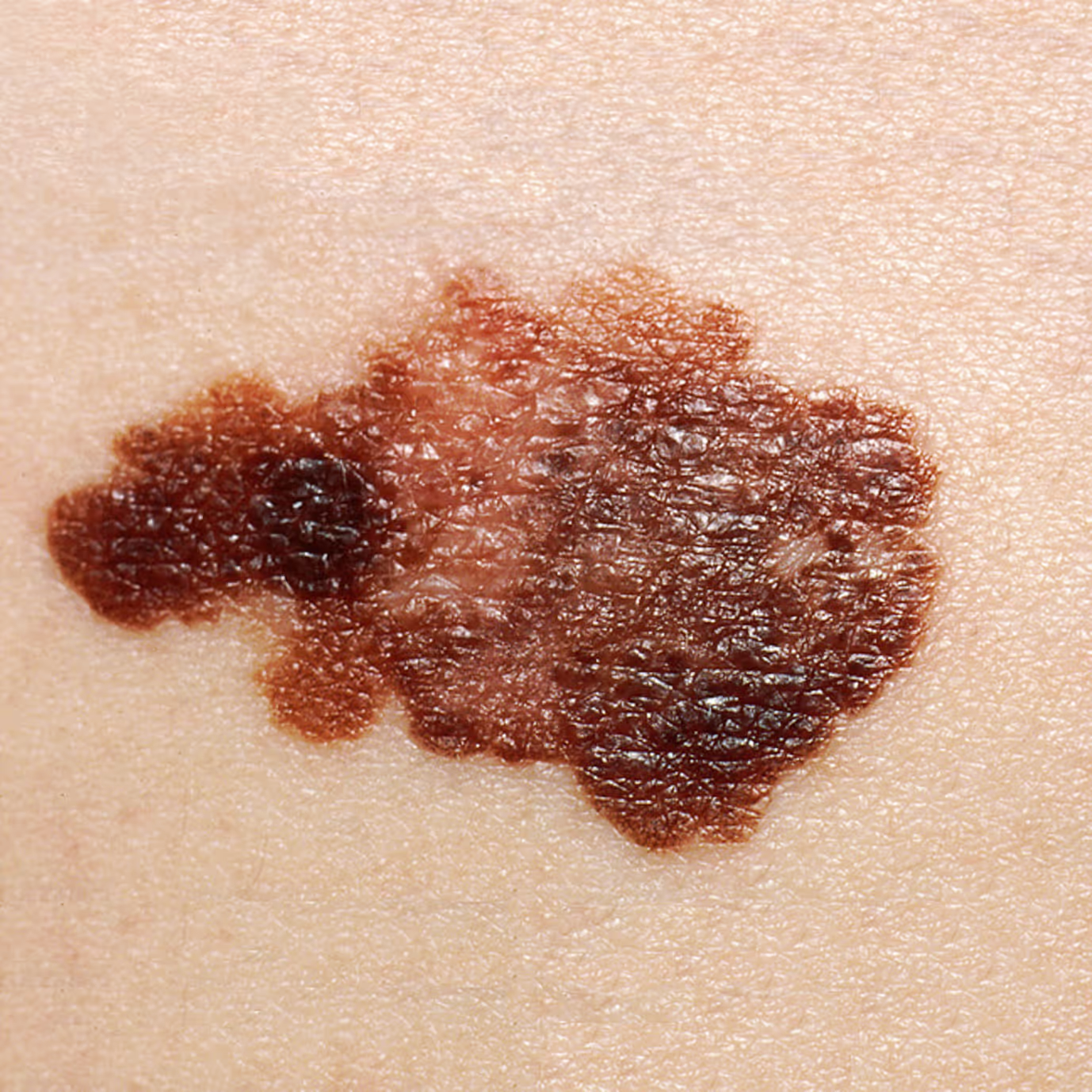
Approximately 1 in 5 Americans will develop skin cancer by the age of 70.
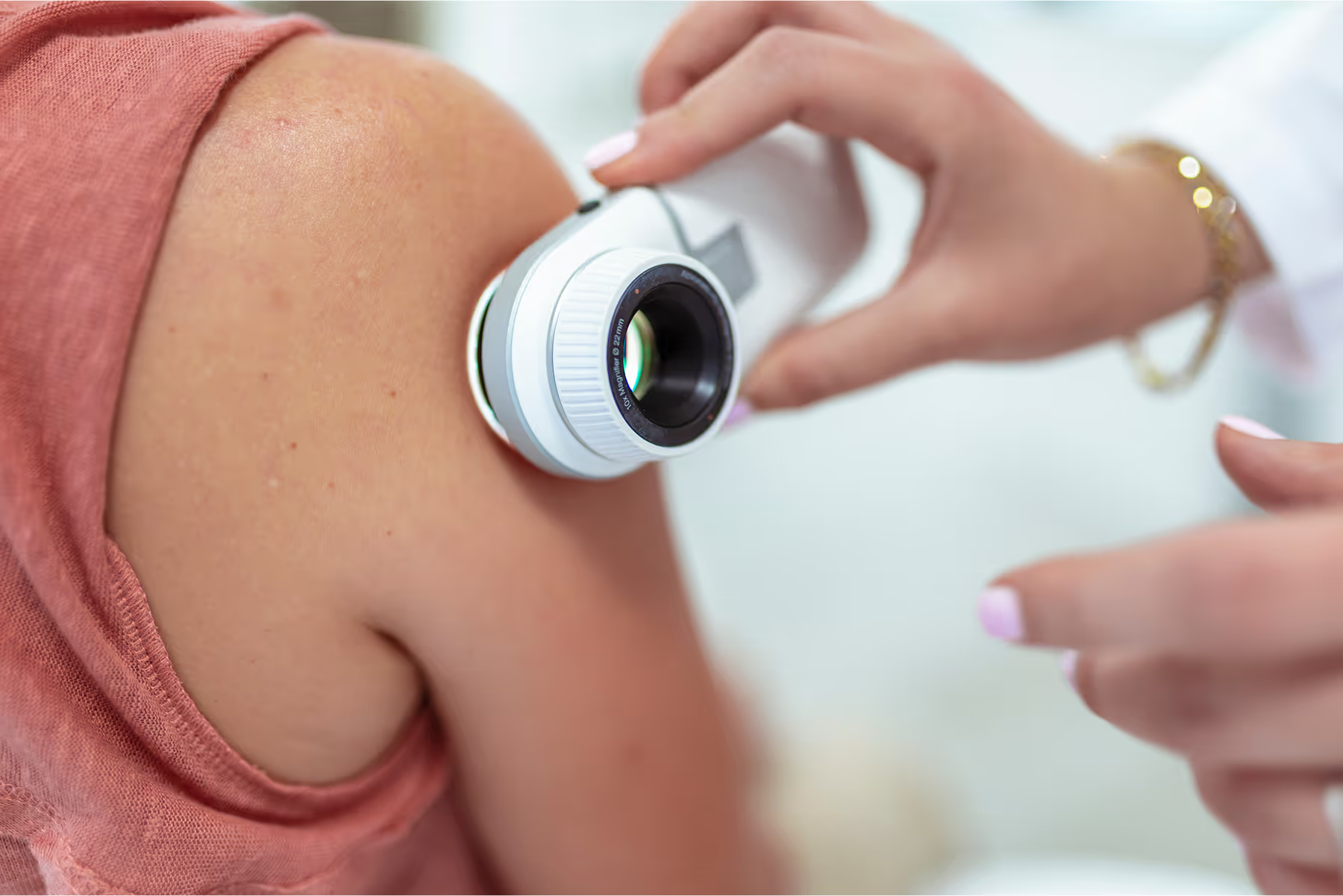
Identifying skin cancer in its earliest stages improves treatment success rates and reduces the likelihood of invasive procedures.
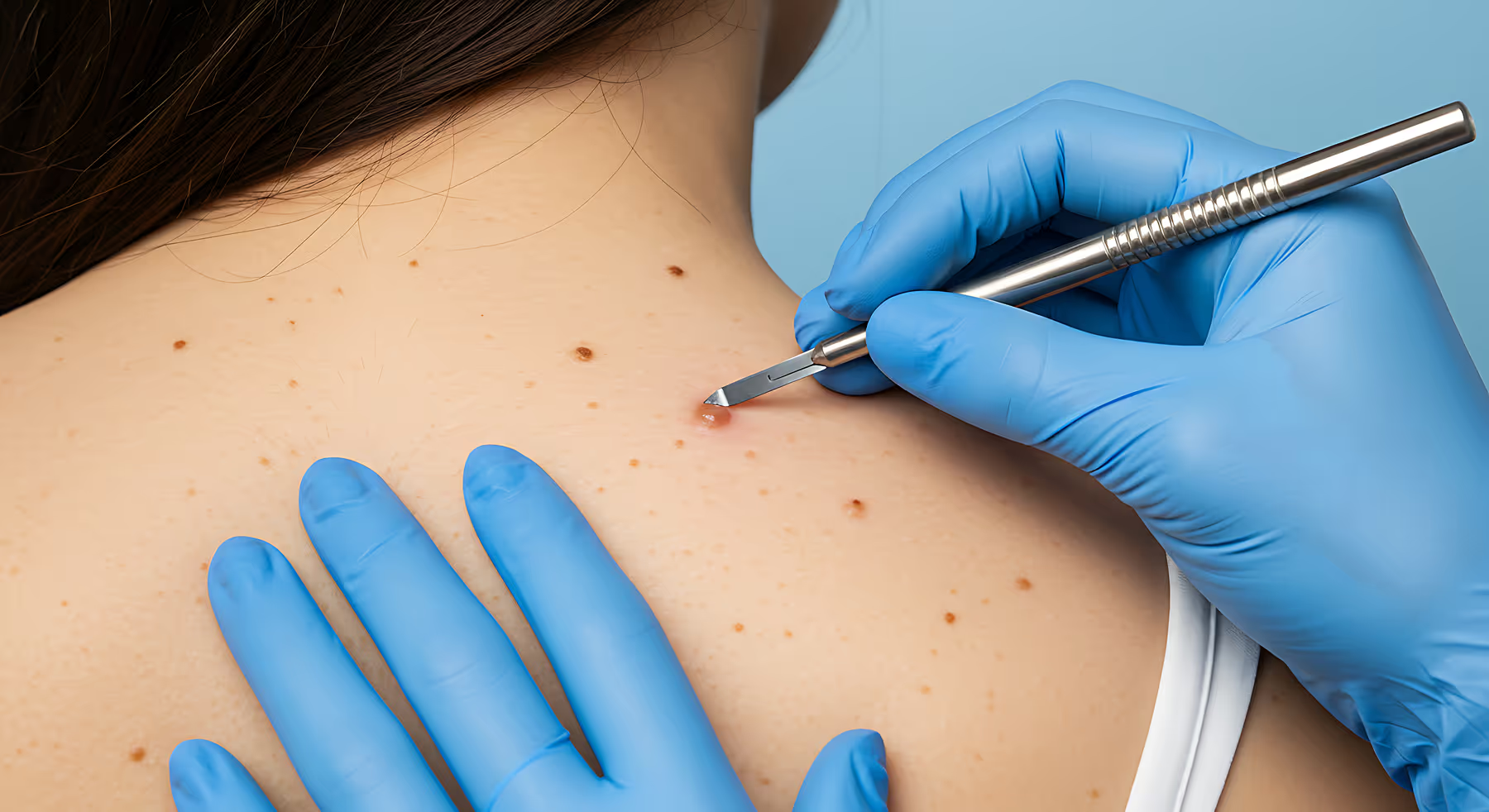
With early detection, treatments like Mohs surgery can precisely target cancerous cells, preserving as much healthy skin as possible.

Prompt treatment minimizes the chance of cancer spreading to other areas of the body, protecting your overall health.
At Lazzara Dermatology, we take a proactive, comprehensive approach to skin cancer care, focusing on early detection, advanced diagnostics, and personalized treatment plans to meet each patient’s unique needs.

Our thorough full-body skin exams are designed to catch suspicious lesions early, providing the foundation for accurate diagnosis and timely treatment. Every inch of your skin is carefully evaluated to ensure nothing is overlooked.
Using dermoscopy, we magnify and closely analyze skin lesions to identify subtle features that may indicate precancerous changes or skin cancer. This advanced diagnostic tool improves accuracy and helps guide appropriate treatment decisions for optimal treatment outcomes.
This precise surgical technique allows us to remove skin cancer with the highest cure rates while sparing as much healthy tissue as possible. It’s an effective option for high-risk or recurring cancers.
We prioritize empowering patients with the knowledge and tools they need to care for their skin. From prevention tips to treatment options, we’re here to guide you every step of the way.
Skin cancers can be treated in multiple ways. If caught early and only involving the superficial layer of the skin, treatments may include use of chemotherapy creams, local destruction using a sharp tool and cautery, or injecting an anti-cancer medicine into the skin cancer. If the skin cancer is deeper, then surgical excision can be performed in which a margin of normal skin is removed around the cancer and sent to an off-site pathology lab for evaluation of complete removal.
Our thorough full-body skin exams are designed to catch suspicious lesions early, providing the foundation for accurate diagnosis and timely treatment. Every inch of your skin is carefully evaluated to ensure nothing is overlooked.
Using dermoscopy, we magnify and closely analyze skin lesions to identify subtle features that may indicate precancerous changes or skin cancer. This advanced diagnostic tool improves accuracy and helps guide appropriate treatment decisions for optimal treatment outcomes.
This precise surgical technique allows us to remove skin cancer with the highest cure rates while sparing as much healthy tissue as possible. It’s an effective option for high-risk or recurring cancers.
We prioritize empowering patients with the knowledge and tools they need to care for their skin. From prevention tips to treatment options, we’re here to guide you every step of the way.
Skin cancers can be treated in multiple ways. If caught early and only involving the superficial layer of the skin, treatments may include use of chemotherapy creams, local destruction using a sharp tool and cautery, or injecting an anti-cancer medicine into the skin cancer. If the skin cancer is deeper, then surgical excision can be performed in which a margin of normal skin is removed around the cancer and sent to an off-site pathology lab for evaluation of complete removal.
Understanding the steps of your skin cancer care can bring peace of mind. At Lazzara Dermatology, we ensure clear communication and compassionate guidance at every stage so you can feel confident in your care.
Your journey begins with a full-body skin exam and, if needed, a biopsy of any suspicious lesions. A biopsy or small sample of your skin growth may be performed to confirm if a suspicious growth is normal or cancerous. Our dermoscopy technology helps us make precise diagnoses, providing clarity and confidence in your treatment plan.
Based on your diagnosis, we’ll develop a personalized treatment plan tailored to your specific needs. Whether it involves topical therapies or surgical intervention, we prioritize your comfort and health.
Treatment is performed with care and precision, ensuring the best possible outcomes. We follow up with detailed aftercare instructions and ongoing monitoring to support long-term skin health.

Get in touch with us today to speak with one of our friendly team members, or reference the resources available from the American Academy of Dermatology (AAD).

Skin cancer is the most common form of cancer in the United States, but there are multiple types to look out for, including basal cell carcinoma, squamous cell carcinoma, and melanoma.
Basal cell carcinoma (BCC) is the most common type of skin cancer and is caused by intermittent sun exposure. BCC can look like a pimple or sore that will not heal or a red patch. It might itch, bleed, or scab. Although it is unlikely for BCC to spread to other parts of the body, if left untreated, BCC can grow wide and deep and become disfiguring and harder to treat. Not all BCCs are created equal--there are many types that behave more aggressively and require advanced treatments such as Mohs surgery or an oral immunotherapy medicine. Additional management includes treatment with chemotherapy creams, local destruction, and surgery. If you are not a surgical candidate, you may be referred to a facility that performs superficial radiation therapy.
Squamous cell carcinoma (SCC) is the second most common type of skin cancer. The leading cause of developing an SCC is cumulative sun exposure, however, other factors including genetic conditions, work exposures, viruses, and immunosuppresive conditions/medications can increase your risk. SCCs can appear as rough, red patches or growths with a crateriform center likened to a volcano. You may see an SCC develop in the site of an injury or even a tattoo. Often times, SCC can be confused for a wart or bug bite. While most SCC are relatively slow growing, some SCC can be more aggressive with a higher risk of spreading to other parts of the body, especially if larger in size and occurring in high risk areas like the ear or lip. Management includes treatment with chemotherapy creams, local destruction, and surgery. During surgical treatment, it may be identified that your SCC has spread around a nerve or blood vessel and you may require adjuvant radiation therapy or additional work-up with an oncology team. If you are not a surgical candidate, you may be referred to a facility that performs superficial radiation therapy.
Melanoma is less common than BCC and SCC but is considered a more dangerous form of skin cancer in which early detection is critical to increased survival rates. Without early diagnosis, melanoma can spread to other parts of the body. As with other types of skin cancer, exposure to UV rays is a major risk factor for the development of melanoma including having a personal or family history of melanoma or other skin cancers, a fair skin complexion or freckles, history of one or more blistering sunburns in childhood, and use of tanning beds. You may also be at increased risk if you make a lot of moles that are irregular (atypical or dysplastic) or have a weakened immune system. Melanoma most commonly occur on the legs of women and the backs of men and can appear as a multi-colored dark mole that is flat or raised. It is also important to be aware of a mole that is changing or evolving, which is part of the ABCDEs signs and symptoms of melanoma. If caught early, melanoma can be surgically treated. When advanced, a surgical oncologist may be needed to perform a sentinel lymph node biopsy and surgical removal of the cancer. Coordination with an oncology team is also performed in cases of more advanced disease with the potential for treatment with immunotherapy, targeted medications, radiation, or chemotherapy. After being diagnosed with a melanoma, you will be monitored very closely with skin examinations scheduled every 3 months for the initial 2 years.
Look for changes in the size, shape, or color of moles, as well as sores that do not heal.
Recognizing the early signs of skin cancer can save lives, and understanding the ABCDEs of melanoma is a helpful way to evaluate suspicious spots:
If you notice any of these signs, it’s important to schedule an evaluation promptly.
While UV radiation is a leading cause, skin cancer can also develop due to genetic factors, immune suppression, or exposure to harmful substances. Regular skin checks are essential, regardless of sun exposure history.
Wear broad-spectrum sunscreen daily, avoid tanning beds, and seek shade during peak sun hours. Protective clothing, wide-brimmed hats, and sunglasses can also help shield your skin from harmful UV rays.
Skin cancer develops when DNA in skin cells becomes damaged, often due to exposure to ultraviolet (UV) radiation from the sun or tanning beds. In fact, UV rays are responsible for 90% of skin cancers.
UV radiation is categorized into three types:
Prolonged or unprotected exposure to UVA and UVB rays increases the likelihood of mutations that lead to uncontrolled cell growth and, ultimately, skin cancer. Although UV radiation is the primary cause, other factors like genetics, immune system health, and certain environmental exposures can also play a role.
At Lazzara Dermatology, we emphasize prevention through education, sun safety practices, and regular skin exams to catch any concerns early and protect your skin for years to come.
If you are not a surgical candidate, we may refer you to receive superficial radiation therapy at an outside facility or coordinate with an oncology team if your skin cancer is advanced and treatment requires evaluation with additional imaging, adjuvant radiation or chemotherapy or immune targeted medicines.
Yes, all skin types, including individuals with darker skin tones can develop skin cancer. In fact, skin cancer that develops in people of color is often diagnosed at a later stage. Thus, it is important to perform self-skin checks and see a dermatologist regularly. Additionally, skin cancer can occur in sun protected areas including inside the mouth, the genital region, and feet/toenails.The American Academy of Dermatology (AAD) also has extensive resources for identifying and preventing skin cancer for all skin tones.
It is important to have a skin check at least once a year with a dermatologist. If you have a history of skin cancer, your skin wellness exams will occur on a more frequent schedule. We all are exposed to sun each day and having a yearly skin check should be no different than going for an annual wellness check with your primary care doctor. Skin checks are critical to prevention and early diagnosis of skin cancer.

