Schedule an Appointment
Schedule an Appointment
**Requested time is not final until you receive confirmation from our office. Please do not submit any Protected Health Information (PHI).

Precision matters when treating skin cancer. At Lazzara Dermatology, we specialize in Mohs Micrographic Surgery, a tissue-sparing technique offering the highest cure rates for skin cancer while preserving healthy tissue. Our expert care ensures optimal outcomes with minimal impact on your skin.

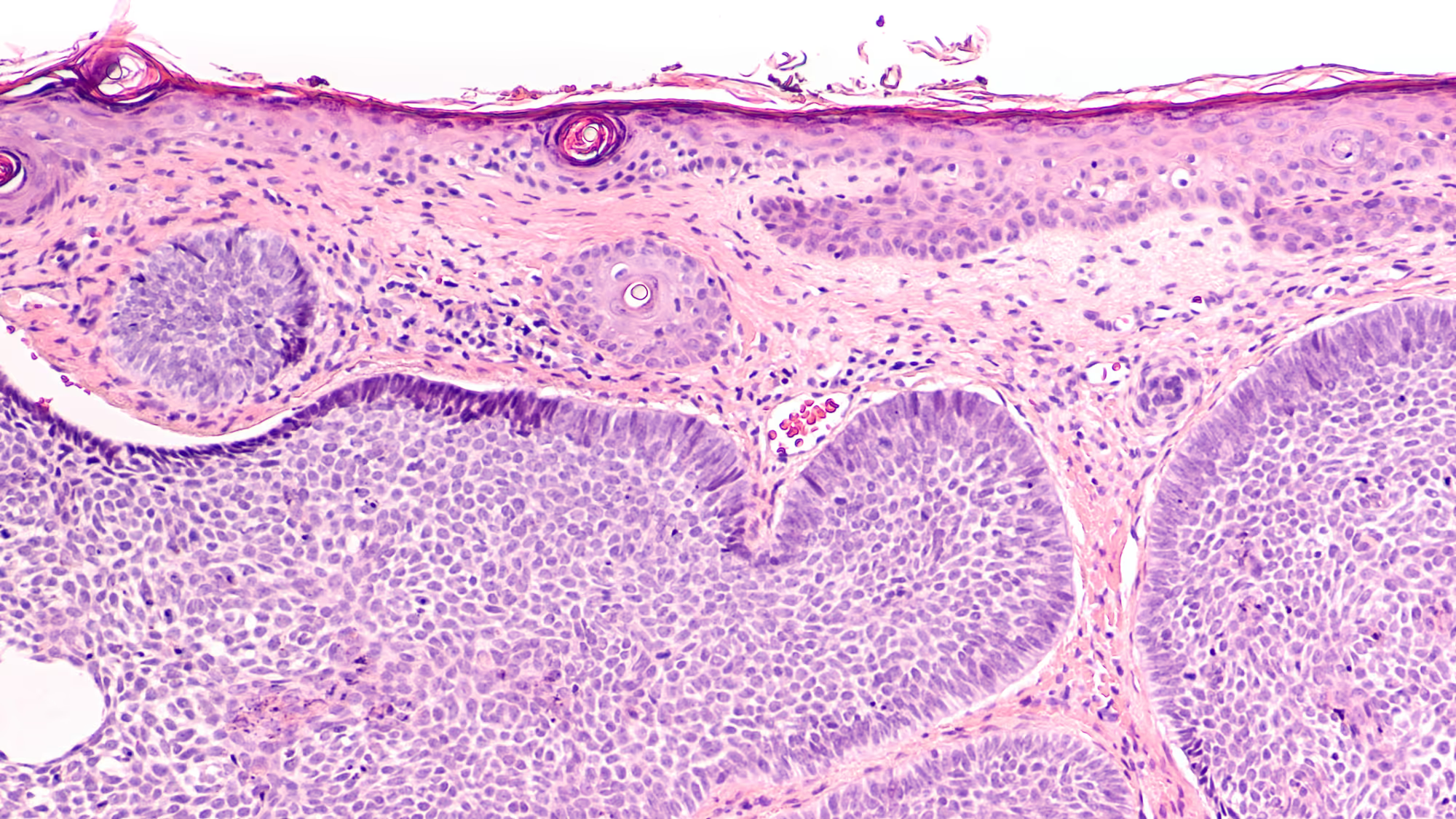
Mohs micrographic surgery is a highly precise procedure used to treat skin cancer, especially high-risk or recurrent cases. The technique involves removing thin layers of skin tissue, which are examined under a microscope in real-time to identify cancer cells. This process continues until there are no remaining cancer cells, ensuring complete removal while sparing as much healthy tissue as possible. Mohs surgery is particularly effective for skin cancers on sensitive or cosmetically important areas like the face, ears, or hands, offering both medical and aesthetic benefits. With additional fellowship training and a board certification in Mohs micrographic surgery, patients will have in-house access to this tissue sparing technique with optimal cure rates for high-risk skin cancers.
Mohs surgery boasts a 98-99% cure rate for skin cancers treated for the first time.
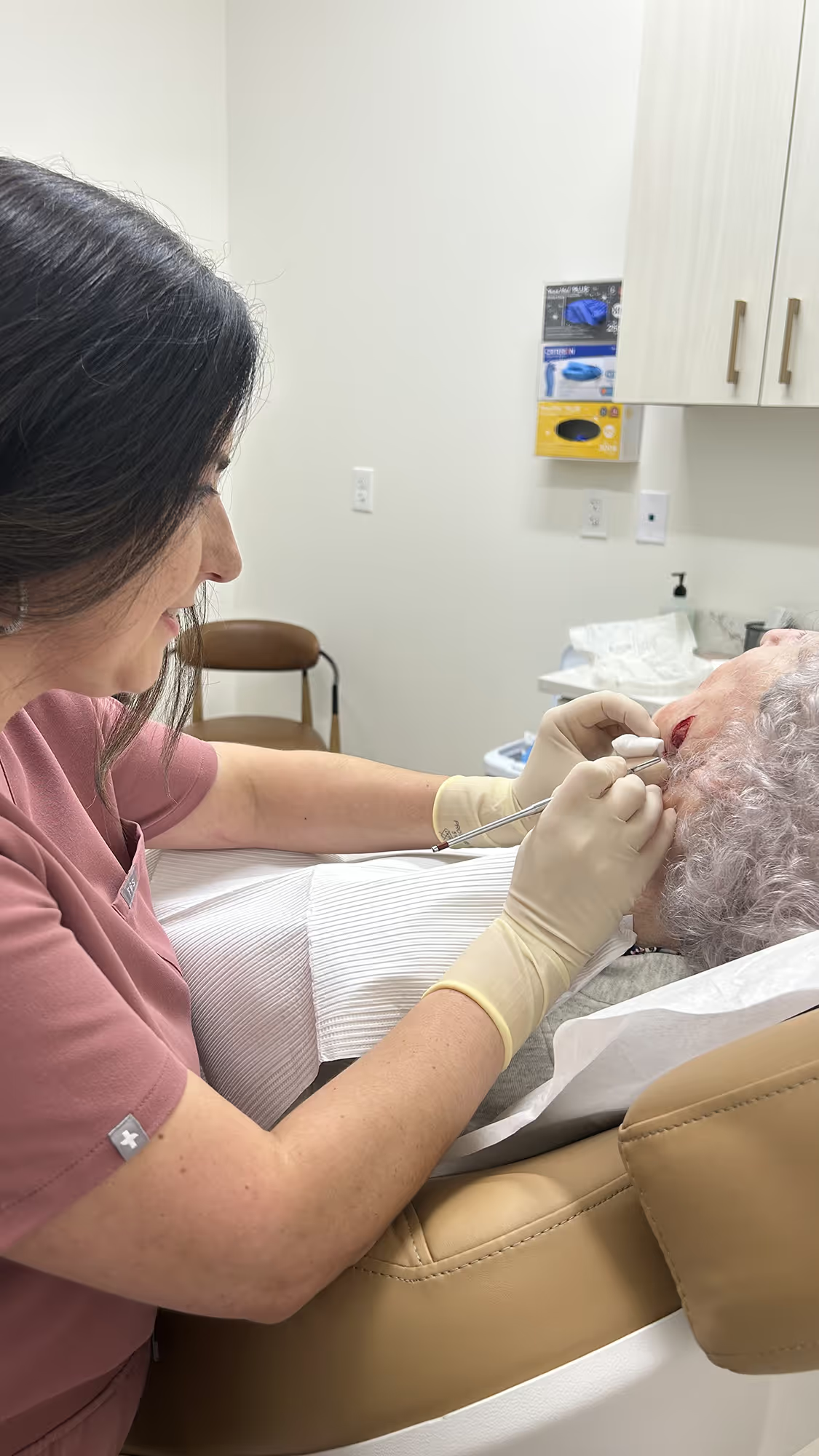
Mohs surgery allows for the meticulous removal of cancerous cells layer by layer, minimizing the chance of recurrence while preserving healthy tissue.

With cure rates as high as 99%, Mohs surgery is one of the most effective treatments for basal and squamous cell carcinomas, especially in delicate or high-risk areas.

The precision of Mohs surgery reduces the size of surgical wounds, resulting in smaller scars and improved cosmetic outcomes. Reconstruction can often be completed the same day for a seamless experience.
Dr. Lazzara is involved in your surgery from start to finish. After meeting with one of her surgical assistants, Dr. Lazzara will identify the skin cancer that will be treated and answer any questions; perform the layered technique to achieve cancer removal; look for residual cancer cells under the microscope and once clear, determine the optimal healing plan. At Lazzara Dermatology, we take steps to not over schedule appointments so your quality of care does not suffer and you'll never feel like you are just a number or on an assembly line during your treatment. We pride ourselves in our patients feeling at ease and supported throughout their surgery and beyond.
Dr. Lazzara is involved in your surgery from start to finish. After meeting with one of her surgical assistants, Dr. Lazzara will identify the skin cancer that will be treated and answer any questions; perform the layered technique to achieve cancer removal; look for residual cancer cells under the microscope and once clear, determine the optimal healing plan. At Lazzara Dermatology, we take steps to not over schedule appointments so your quality of care does not suffer and you'll never feel like you are just a number or on an assembly line during your treatment. We pride ourselves in our patients feeling at ease and supported throughout their surgery and beyond.

Before surgery, we conduct a detailed skin evaluation using advanced techniques such as dermoscopy to accurately diagnose skin cancer. For patients who have already received a diagnosis and are referred to our office, we begin with a consultation to evaluate the cancer and review the pathology together, or perform this examination on the day of the procedure. This approach ensures an accurate assessment and allows us to develop a treatment plan tailored to your individual needs.
Our office is equipped with the latest diagnostic and surgical tools, enabling precise tissue removal and real-time analysis for superior results.
After surgery, we provide detailed aftercare instructions and follow-up visits to monitor your healing and address any concerns. Our goal is to support your recovery and long-term health.
We prioritize your comfort and understanding throughout the process, providing clear explanations and compassionate care to ensure you feel confident every step of the way. On the day of surgery, your operative site will be identified by Dr. Lazzara. The Mohs micrographic surgery procedure will be explained in detail, and Dr. Lazzara and her team are always happy to answer any questions or concerns you may have.
Before surgery, we conduct a detailed skin evaluation using advanced techniques such as dermoscopy to accurately diagnose skin cancer. For patients who have already received a diagnosis and are referred to our office, we begin with a consultation to evaluate the cancer and review the pathology together, or perform this examination on the day of the procedure. This approach ensures an accurate assessment and allows us to develop a treatment plan tailored to your individual needs.
Our office is equipped with the latest diagnostic and surgical tools, enabling precise tissue removal and real-time analysis for superior results.
After surgery, we provide detailed aftercare instructions and follow-up visits to monitor your healing and address any concerns. Our goal is to support your recovery and long-term health.
We prioritize your comfort and understanding throughout the process, providing clear explanations and compassionate care to ensure you feel confident every step of the way. On the day of surgery, your operative site will be identified by Dr. Lazzara. The Mohs micrographic surgery procedure will be explained in detail, and Dr. Lazzara and her team are always happy to answer any questions or concerns you may have.
Understanding your Mohs surgery journey can ease any anxiety. Here’s what to expect during your personalized treatment experience.
Your journey begins with a consultation to assess your skin cancer diagnosis and determine if Mohs surgery is appropriate. We’ll discuss the procedure, answer your questions, and prepare you for the day of surgery.
On the day of surgery, layers of cancerous tissue are removed and examined under a microscope in real time. This process is repeated until all cancer cells are removed, ensuring complete removal and minimal impact on healthy tissue.
Once the cancer is removed, we perform any necessary reconstruction to restore your skin’s appearance. You’ll receive detailed aftercare instructions and schedule follow-ups to monitor healing and maintain long-term health.
Get in touch with us today to speak with one of our friendly team members, or reference the resources available from the American Academy of Dermatology (AAD) and American College of Mohs Surgery (ACMS).