Schedule an Appointment
Schedule an Appointment
**Requested time is not final until you receive confirmation from our office. Please do not submit any Protected Health Information (PHI).

Persistent rashes and skin conditions can disrupt your comfort and confidence. At Lazzara Dermatology, we specialize in diagnosing and treating a variety of skin, hair, and nail issues, providing effective solutions tailored to your unique needs.


Rashes and skin conditions can arise from various factors, including allergens, infections, autoimmune disorders, or environmental triggers like irritants or excessive heat. Conditions like eczema, psoriasis, and rosacea often have genetic components, while others, such as contact dermatitis, result from direct exposure to allergens. A proper diagnosis is essential to determine the underlying cause and create an effective treatment plan, as many skin conditions share overlapping symptoms.
Eczema affects approximately 10% of the population, with higher prevalence in children.
Over 8 million people in the U.S. live with psoriasis, a chronic autoimmune condition affecting skin and joints.

Professional care ensures precise diagnosis and targeted treatment, providing quicker relief and minimizing the impact of symptoms.
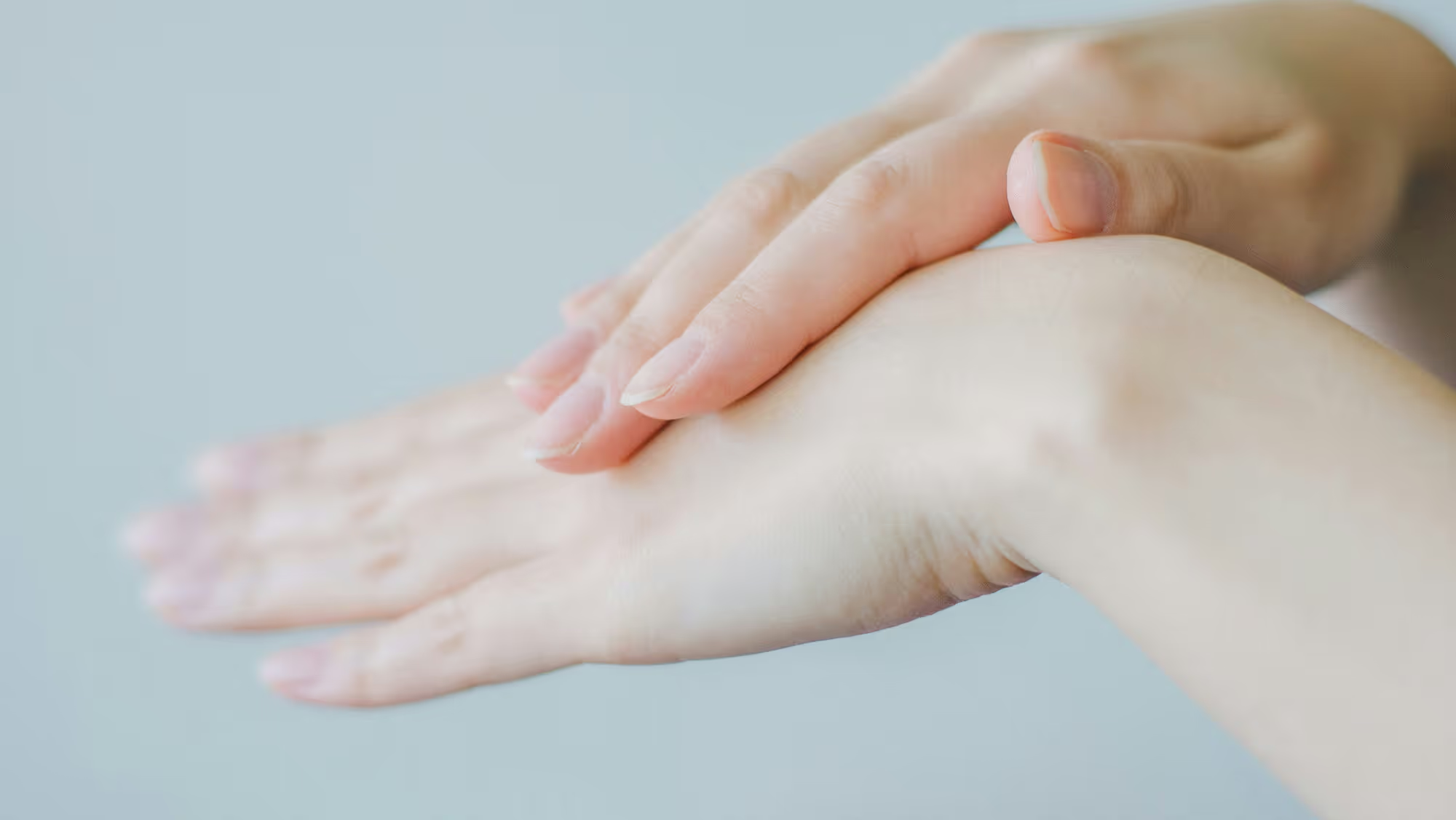
Effective management of chronic conditions like eczema or psoriasis can reduce discomfort, boost confidence, and help patients live more comfortably.

Early treatment and ongoing care prevent conditions from worsening or leading to secondary issues, such as infections or scarring.
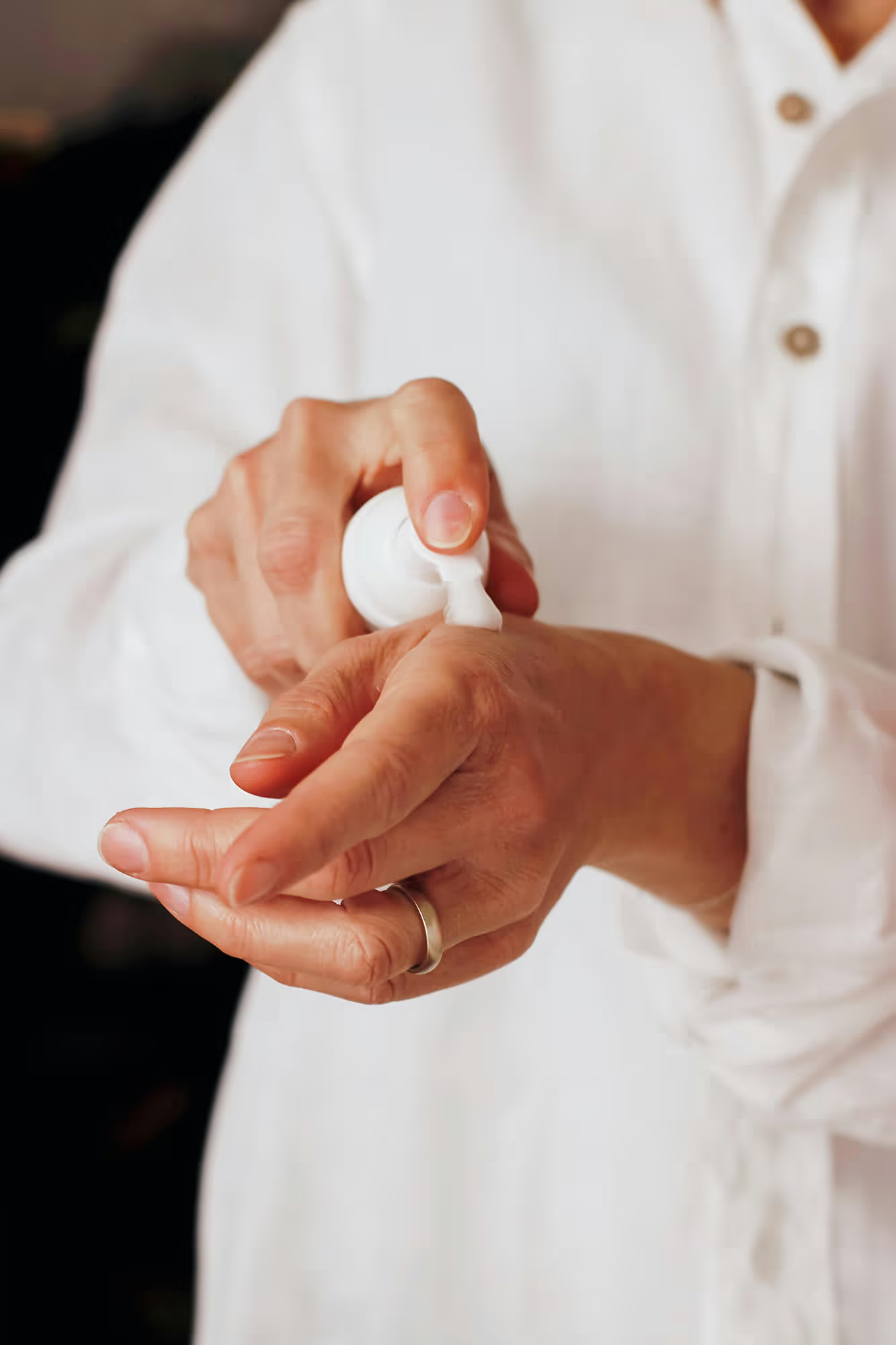
Dermatologic evaluation can often unveil signs first presenting on your skin that may point to a more serious internal disease process.
At Lazzara Dermatology, we provide expert care for a variety of conditions involving the skin, hair, and nails. Our approach focuses on accurate diagnosis and personalized treatment to help you manage symptoms and improve your skin’s health and appearance.
At Lazzara Dermatology, we provide expert care for a variety of conditions involving the skin, hair, and nails. Our approach focuses on accurate diagnosis and personalized treatment to help you manage symptoms and improve your skin’s health and appearance.

Eczema, or atopic dermatitis, is a chronic condition that causes dry, itchy, and inflamed skin. It often begins in childhood but can occur at any age. Eczema often flares due to triggers such as allergens, stress, or environmental factors. Our treatments aim to reduce inflammation and restore the skin barrier with a combination of topical, biologic, and oral immunosuppressant therapies, and lifestyle recommendations.
Psoriasis is a condition that leads to the rapid buildup of skin cells, resulting in thick, scaly plaques. It is now understood that psoriasis is not just a disease of the skin but can be associated with joint, heart, and liver disease. Our care includes advanced options such as topical and oral treatments and biologic medications to help manage symptoms and improve your quality of life.
Acne affects people of all ages and can range from mild to severe. We provide customized care, including prescription topical and oral medications, chemical peels, and lifestyle recommendations to address the root causes of acne and prevent scarring.
Contact dermatitis occurs when the skin reacts to irritants or allergens, causing redness, itching, and sometimes blisters. Our approach includes identifying the trigger through detailed evaluations and patch testing, followed by targeted treatments to soothe the skin and prevent future reactions.
Rosacea is a common skin condition that can present with an increased tendency to flush easily, lasting redness, acne-like breakouts, and visible blood vessels on the face, particularly affecting the cheeks, nose, and chin. Rosacea can also affect the eyes causing a dry, sand paper-like sensation. In more severe cases and if left untreated, rosacea can lead to thickening of the skin. Triggers for rosacea include heat, stress, alcohol, coffee, chocolate, and spicy foods. Our care for rosacea includes helping you to discover your triggers, identifying the type of rosacea you have, and developing a unique treatment plan which can include a combination of skin barrier maintenance, topical, and oral therapies.
Vitiligo is a chronic autoimmune skin pigment disorder in which your body attacks the pigment cells called melanocytes. Vitiligo presents as lighter spots or patches on the skin due to pigment loss and can be localized or more widespread depending on the type of vitiligo you have. During the active phase, patches of vitiligo appear pink or tricolored while inactive disease is recognized as white patches. Vitiligo is also strongly associated with thyroid disease. The sooner vitiligo is treated, the more likely it is to achieve a treatment response and restore pigment. Treatments can involve topical or oral therapy with corticosteroids or immunomodulators.
Hair loss or alopecia is experienced by most individuals at some point in their lives and is an emotionally-distressing condition. There are many types of hair loss including scarring and non-scarring variants. The most common types of hair loss include androgenic or hereditary, patterned baldness, alopecia areata associated with autoimmune disease, telogen effluvium due to emotional or physical stress, and anagen effluvium associated with medical treatment like chemotherapy. We recognize the importance of identifying the cause of your hair loss and developing a treatment plan that is specific to you. Hair loss is best approached in a multifaceted way and should include topical, oral, and stimulatory therapeutic interventions.
Hyperpigmentation is the development of dark spots due to sun damage, medications, hormonal changes, or resolving inflammation. Diligent sun protection is essential to prevent worsening or recurrence, along with topical formulations designed to help restore your natural skin tone.
Hyperhidrosis is excessive sweating due to overactive sweat glands. Sweating often occurs in the underarms, palms or soles but can also be experienced all over the body. Hyperhidrosis can occur in healthy individuals but also can be associated with certain medical conditions or medications you may be taking. It is important for us to determine the type and severity of your hyperhidrosis. Treatments can include prescription strength topical antiperspirants, oral medications which reduce the sweat gland's ability to produce sweat, and botulinum toxin injections.
Actinic keratoses (AK) are precancerous growths due to accumulated sun damage that often appear in sun exposed areas such as the face, ears, lip, neck, and chest. AKs appear as brown to red rough textured spots or plaques that can be painful to the touch, itch, or bleed. It is important to treat AKs because approximately 10% can turn into squamous cell carcinoma. AKs may not always be visible but hidden just under the skin surface and considered subclinical. Thus, treatment involves destruction of visible AKs with cryosurgery, which is the application of liquid nitrogen to freeze the AK. Treatment of subclinical AKs or broad zones of precancers which cannot all be targeted with cryosurgery is best handled with prescribing a field therapy like topical chemotherapy cream. It is important to understand AKs may take several rounds of treatment to cure and new AKs can develop. This highlights the importance of seeing us regularly to monitor your progress and keep you current on preventative measures to decrease your risk of developing skin cancer.
Moles, also called nevi, are present on most individuals, irrespective of skin type and can present anywhere on the body. We develop most of our moles in childhood and they tend to grow with us or can lighten or darken in color. In adulthood, a changing mole or new mole can be a sign of a precancerous change or melanoma. Fairer complected individuals may be more susceptible to having a larger abundance of moles and can be at higher risk of forming atypical moles known as dysplastic nevi and melanoma which can sometimes arise from a dysplastic nevus. Furthermore some people may have a genetic condition known as familial atypical multiple mole-melanoma (FAMMM) syndrome in which they have greater than 50 moles, atypical moles, and blood relative with a history of melanoma. Scheduling routine skin wellness exams provides you with the comfort of having all your moles examined and monitored. At these visits, we will determine if you have an irregular mole that needs to be removed. We are also happy to remove moles that may be bothersome to you.
There are a variety of growths that can form on our skin. Growths can be rough or smooth in texture, extend beyond the surface of our skin like a dome or appear as a lump underneath the skin. Sometimes growths are painless or can become irritated, itchy, or painful. We specialize in identifying skin growths as normal or dangerous and will develop an appropriate treatment plan. We also are skilled in removal of growths that may be aesthetically displeasing or bothersome to you.
The skin is the largest organ of the body and serves as a barrier of protection. Individuals with inflammatory skin conditions like eczema or uncontrolled systemic disease like diabetes can have a compromised barrier and become more susceptible to bacterial, fungal, and viral skin infections. Our expertise in the skin makes us equipped to recognize skin infections, prescribe effective treatments, and educate about preventative measures.
Nail changes can often be signs of other medical conditions. Changes of the nails may be seen as thickening, dryness, brittleness, splitting, pitting and discoloration. Benign and cancerous growths can also form around or underneath the nails. Dermatologists have an extensive understanding of the complex nail anatomy, pathology, and how it relates to your overall health.
Eczema, or atopic dermatitis, is a chronic condition that causes dry, itchy, and inflamed skin. It often begins in childhood but can occur at any age. Eczema often flares due to triggers such as allergens, stress, or environmental factors. Our treatments aim to reduce inflammation and restore the skin barrier with a combination of topical, biologic, and oral immunosuppressant therapies, and lifestyle recommendations.
Psoriasis is a condition that leads to the rapid buildup of skin cells, resulting in thick, scaly plaques. It is now understood that psoriasis is not just a disease of the skin but can be associated with joint, heart, and liver disease. Our care includes advanced options such as topical and oral treatments and biologic medications to help manage symptoms and improve your quality of life.
Acne affects people of all ages and can range from mild to severe. We provide customized care, including prescription topical and oral medications, chemical peels, and lifestyle recommendations to address the root causes of acne and prevent scarring.
Contact dermatitis occurs when the skin reacts to irritants or allergens, causing redness, itching, and sometimes blisters. Our approach includes identifying the trigger through detailed evaluations and patch testing, followed by targeted treatments to soothe the skin and prevent future reactions.
Rosacea is a common skin condition that can present with an increased tendency to flush easily, lasting redness, acne-like breakouts, and visible blood vessels on the face, particularly affecting the cheeks, nose, and chin. Rosacea can also affect the eyes causing a dry, sand paper-like sensation. In more severe cases and if left untreated, rosacea can lead to thickening of the skin. Triggers for rosacea include heat, stress, alcohol, coffee, chocolate, and spicy foods. Our care for rosacea includes helping you to discover your triggers, identifying the type of rosacea you have, and developing a unique treatment plan which can include a combination of skin barrier maintenance, topical, and oral therapies.
Vitiligo is a chronic autoimmune skin pigment disorder in which your body attacks the pigment cells called melanocytes. Vitiligo presents as lighter spots or patches on the skin due to pigment loss and can be localized or more widespread depending on the type of vitiligo you have. During the active phase, patches of vitiligo appear pink or tricolored while inactive disease is recognized as white patches. Vitiligo is also strongly associated with thyroid disease. The sooner vitiligo is treated, the more likely it is to achieve a treatment response and restore pigment. Treatments can involve topical or oral therapy with corticosteroids or immunomodulators.
Hair loss or alopecia is experienced by most individuals at some point in their lives and is an emotionally-distressing condition. There are many types of hair loss including scarring and non-scarring variants. The most common types of hair loss include androgenic or hereditary, patterned baldness, alopecia areata associated with autoimmune disease, telogen effluvium due to emotional or physical stress, and anagen effluvium associated with medical treatment like chemotherapy. We recognize the importance of identifying the cause of your hair loss and developing a treatment plan that is specific to you. Hair loss is best approached in a multifaceted way and should include topical, oral, and stimulatory therapeutic interventions.
Hyperpigmentation is the development of dark spots due to sun damage, medications, hormonal changes, or resolving inflammation. Diligent sun protection is essential to prevent worsening or recurrence, along with topical formulations designed to help restore your natural skin tone.
Hyperhidrosis is excessive sweating due to overactive sweat glands. Sweating often occurs in the underarms, palms or soles but can also be experienced all over the body. Hyperhidrosis can occur in healthy individuals but also can be associated with certain medical conditions or medications you may be taking. It is important for us to determine the type and severity of your hyperhidrosis. Treatments can include prescription strength topical antiperspirants, oral medications which reduce the sweat gland's ability to produce sweat, and botulinum toxin injections.
Actinic keratoses (AK) are precancerous growths due to accumulated sun damage that often appear in sun exposed areas such as the face, ears, lip, neck, and chest. AKs appear as brown to red rough textured spots or plaques that can be painful to the touch, itch, or bleed. It is important to treat AKs because approximately 10% can turn into squamous cell carcinoma. AKs may not always be visible but hidden just under the skin surface and considered subclinical. Thus, treatment involves destruction of visible AKs with cryosurgery, which is the application of liquid nitrogen to freeze the AK. Treatment of subclinical AKs or broad zones of precancers which cannot all be targeted with cryosurgery is best handled with prescribing a field therapy like topical chemotherapy cream. It is important to understand AKs may take several rounds of treatment to cure and new AKs can develop. This highlights the importance of seeing us regularly to monitor your progress and keep you current on preventative measures to decrease your risk of developing skin cancer.
Moles, also called nevi, are present on most individuals, irrespective of skin type and can present anywhere on the body. We develop most of our moles in childhood and they tend to grow with us or can lighten or darken in color. In adulthood, a changing mole or new mole can be a sign of a precancerous change or melanoma. Fairer complected individuals may be more susceptible to having a larger abundance of moles and can be at higher risk of forming atypical moles known as dysplastic nevi and melanoma which can sometimes arise from a dysplastic nevus. Furthermore some people may have a genetic condition known as familial atypical multiple mole-melanoma (FAMMM) syndrome in which they have greater than 50 moles, atypical moles, and blood relative with a history of melanoma. Scheduling routine skin wellness exams provides you with the comfort of having all your moles examined and monitored. At these visits, we will determine if you have an irregular mole that needs to be removed. We are also happy to remove moles that may be bothersome to you.
There are a variety of growths that can form on our skin. Growths can be rough or smooth in texture, extend beyond the surface of our skin like a dome or appear as a lump underneath the skin. Sometimes growths are painless or can become irritated, itchy, or painful. We specialize in identifying skin growths as normal or dangerous and will develop an appropriate treatment plan. We also are skilled in removal of growths that may be aesthetically displeasing or bothersome to you.
The skin is the largest organ of the body and serves as a barrier of protection. Individuals with inflammatory skin conditions like eczema or uncontrolled systemic disease like diabetes can have a compromised barrier and become more susceptible to bacterial, fungal, and viral skin infections. Our expertise in the skin makes us equipped to recognize skin infections, prescribe effective treatments, and educate about preventative measures.
Nail changes can often be signs of other medical conditions. Changes of the nails may be seen as thickening, dryness, brittleness, splitting, pitting and discoloration. Benign and cancerous growths can also form around or underneath the nails. Dermatologists have an extensive understanding of the complex nail anatomy, pathology, and how it relates to your overall health.
Understanding your treatment process can help set expectations and ease concerns. At Lazzara Dermatology, we guide you every step of the way toward healthier skin.
Your journey begins with a detailed skin evaluation. We’ll discuss your symptoms and medical history, and use advanced tools to diagnose your condition accurately. During your skin evaluation it may be determined that a skin biopsy is needed to gather more information and arrive at a proper diagnosis. A skin biopsy involves use of local anesthetic to comfortably take a shave or cylindrical sample of your skin to send to a pathologist for further analysis. Results typically are received in 7-10 days.
Based on your diagnosis, we’ll develop a personalized treatment plan. This might include topical creams, oral medications, or advanced therapies like biologics to address your symptoms and their root causes.
We’ll monitor your progress through follow-up visits and adjusting your treatment plan as needed. For chronic conditions, we provide education and support to help you manage symptoms effectively.

Get in touch with us today to speak with one of our friendly team members, or reference the resources available from the American Academy of Dermatology (AAD).